
Multimorbidity recall system - Automating preventitve healthcare
Role
Date
Multi Factor Authentication
Imagine a busy GP practice where a patient with multiple long-term health conditions such as diabetes, hypertension, and high cholesterol needs to schedule multiple separate appointments. Each visit requires additional administrative effort in yearly recalls and follow-ups; placing unnecessary strain on GP staff and frustrating patients. This inefficiency contributes to growing NHS costs, increased backlogs, and missed opportunities for preventive care.
Preventive healthcare is crucial in reducing long-term NHS expenditures by enabling early diagnosis and intervention. By consolidating health checkups, GPs can optimise patient visits, reducing unnecessary appointments and administrative burdens while improving overall patient outcomes. However, Primary care hasn’t changed fast enough to keep up with demand with GPs managing a 17% patient increase since 2015.
Recognising this need, our project received funding from a government-backed social enterprise as part of the NHS Long-Term Plan. The initiative aimed to accelerate the adoption of medical devices, diagnostics, and digital health solutions to help GP practices streamline preventive healthcare. Our focus was on developing a concept for an MVP that could identify patients with multimorbid conditions specifically Hypertension, Diabetes, CKD (Chronic kidney disease) & CPOD (Chronic Obstructive Pulmonary Disease), helping GPs efficiently manage their yearly QOF (Quality of Framework) targets.
Objectives
- Empower GPs to effectively monitor and manage their targets.
- Provide meaningful insights by leveraging patient demographics and clinical data.
- Streamline workflows, reducing administrative burdens and optimising GP staff efficiency.
- Create actionable insights for resource allocation and cost savings.
Problem Statement
Whilst Appt recall service has reduced administrative tasks by automating patient recalls, it is still limited to recalling patients based on a single condition. This limitation fails to address patients with multiple comorbidities, resulting in frequent visits throughout the year and creating inefficiencies for patients and GP staff.
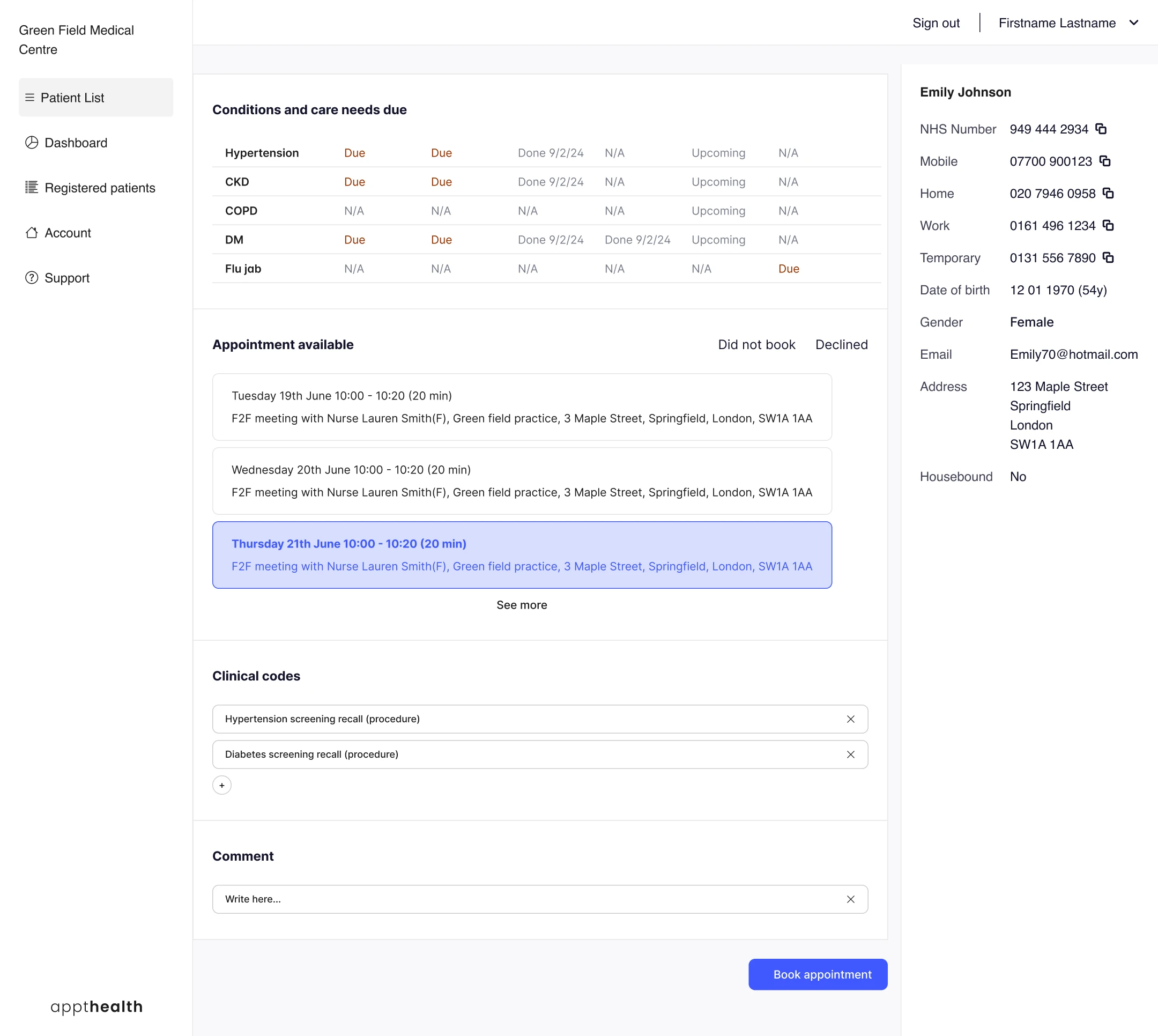
The new platform aims to identify patients with multiple conditions, allowing for the consolidation of similar checkups and tests into one. This approach optimises GP staff time, reduces the need for multiple patient visits, and ensures efficient time management. For GP staff that meant:
- Increased workload due to repetitive administrative tasks.
- Inefficient resource allocation, leading to overbooked schedules with no staff availabilities
- Missed preventive opportunities, as screenings weren’t always addressed holistically.
The solution: A Smarter appraoch to identify multiple pre-existing conditions
The new platform aimed to identify patients with multiple conditions and consolidate preventive health checks, ensuring that:
Patients with overlapping medical needs could have their checkups grouped into fewer visits.
GP staff could optimise appointment scheduling, reducing workload.
Resources could be allocated more effectively, improving QOF (Quality of framework) yearly target achievement uses.
Understanding our Users
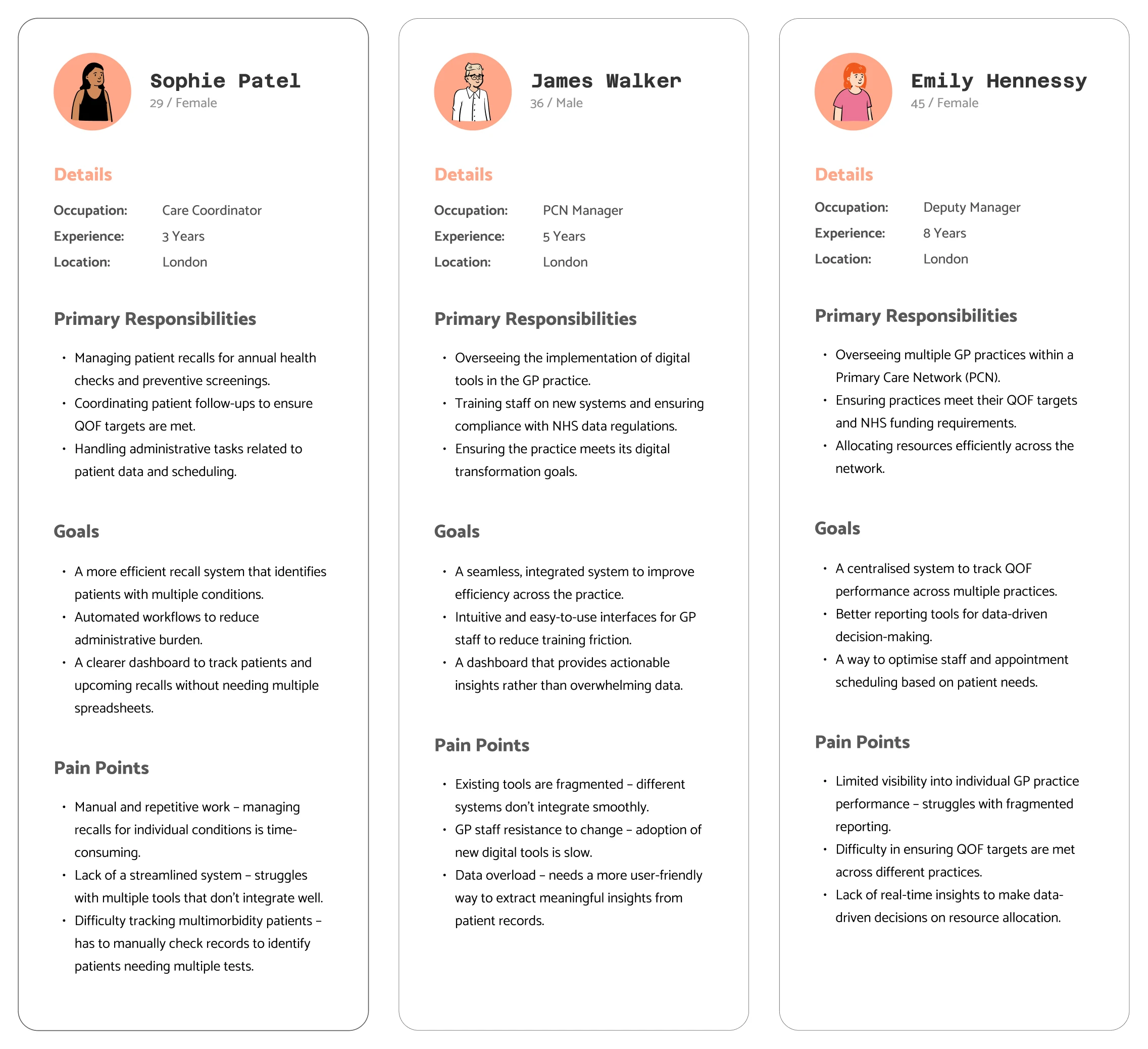
To bring this vision to life, we collaborated with a local Primary Care Network (PCN) in a London borough managing several GPs within the area. Working closely with care coordinators, digital practice leads, and PCN managers we conducted several user interviews with key stakeholders. based on this interaction, to understand their workflows, challenges, and needs to create our user personas:
Dashboard
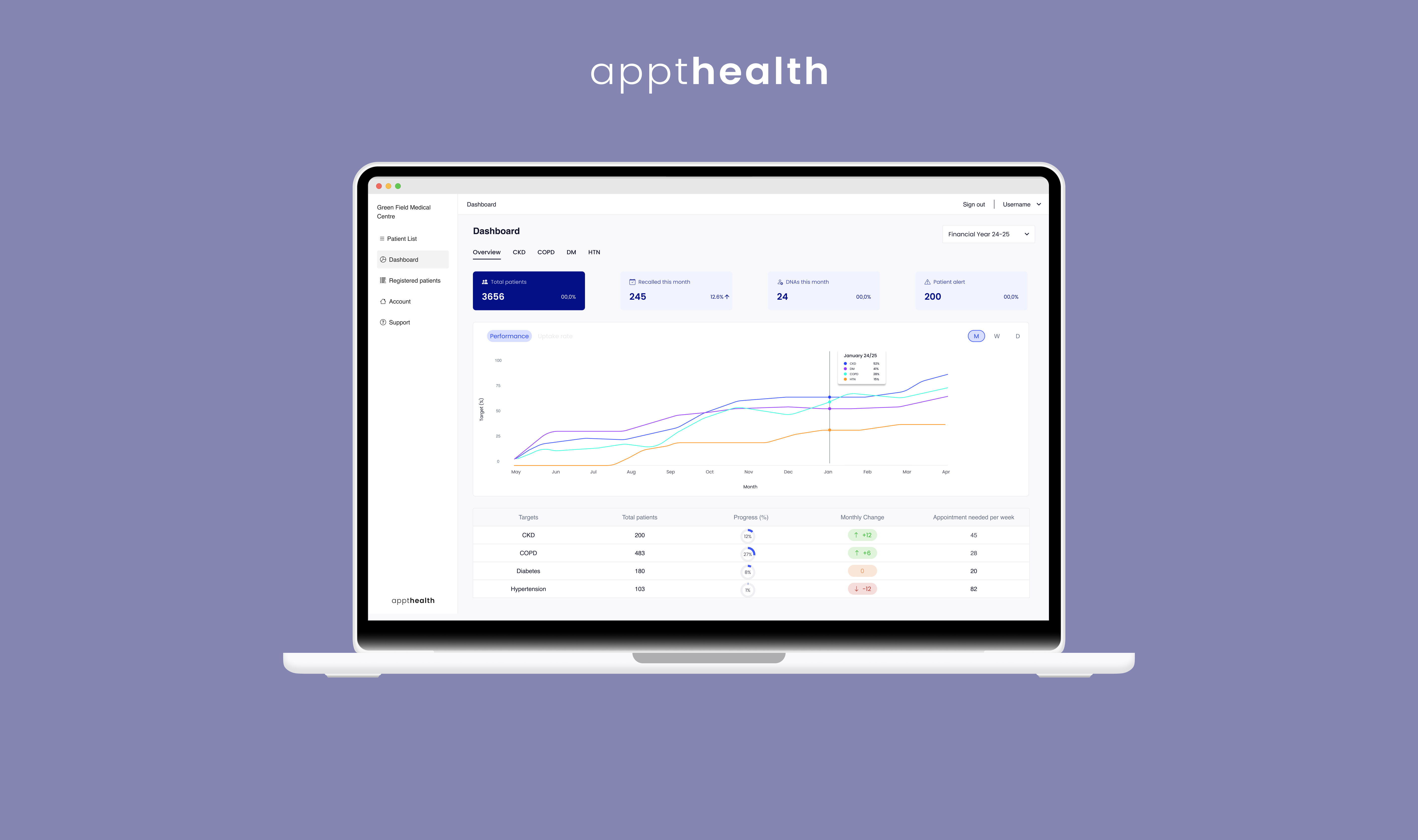
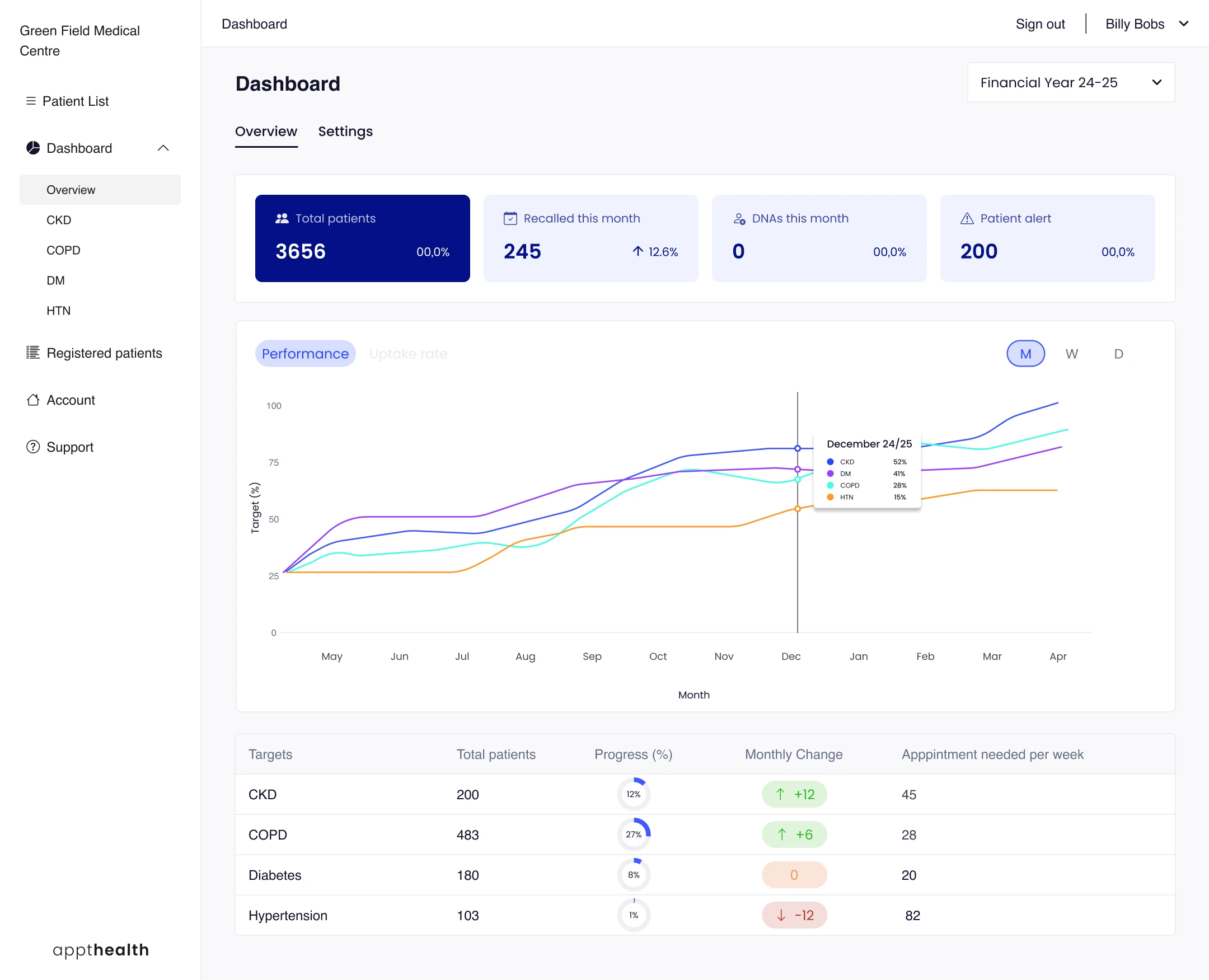
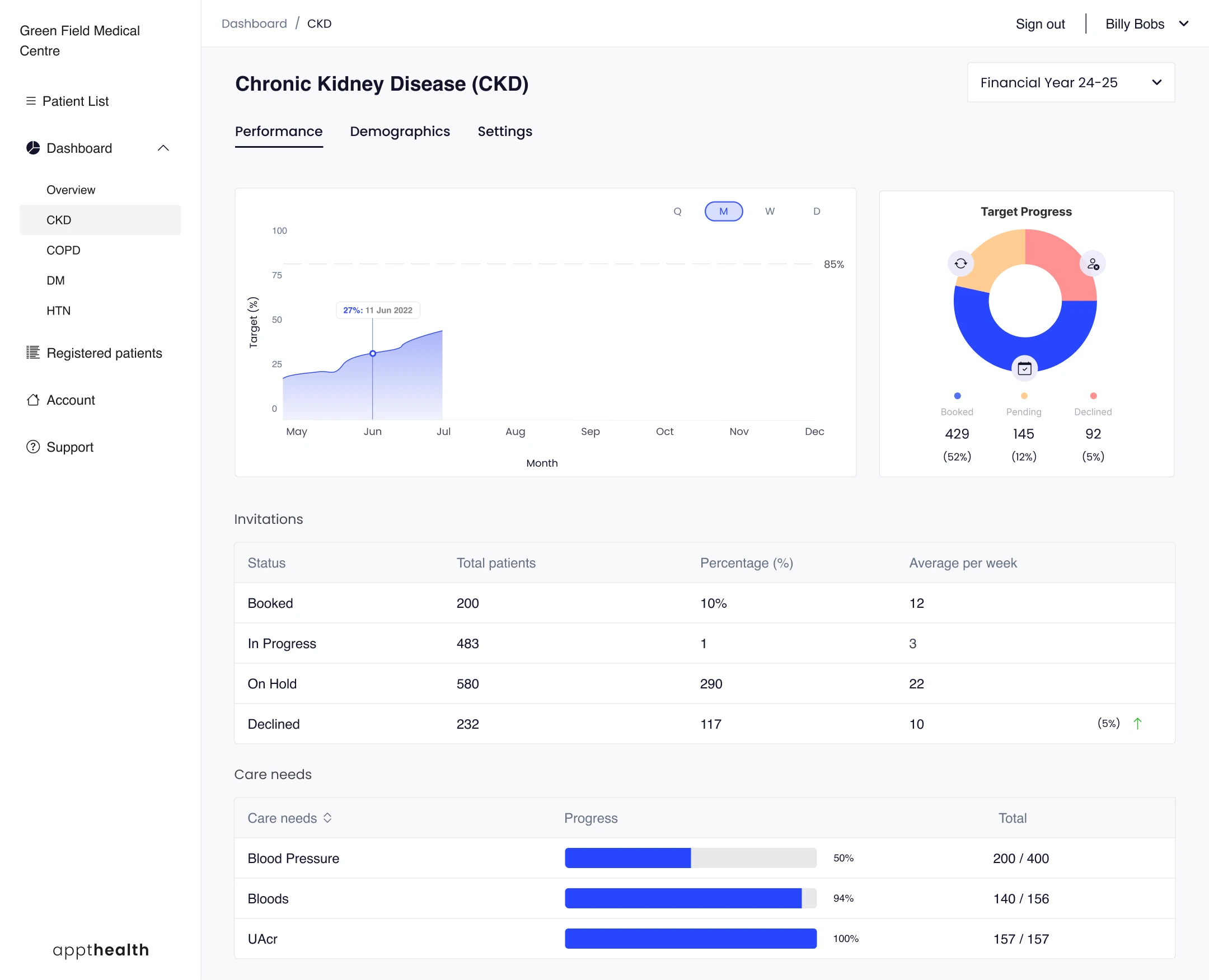
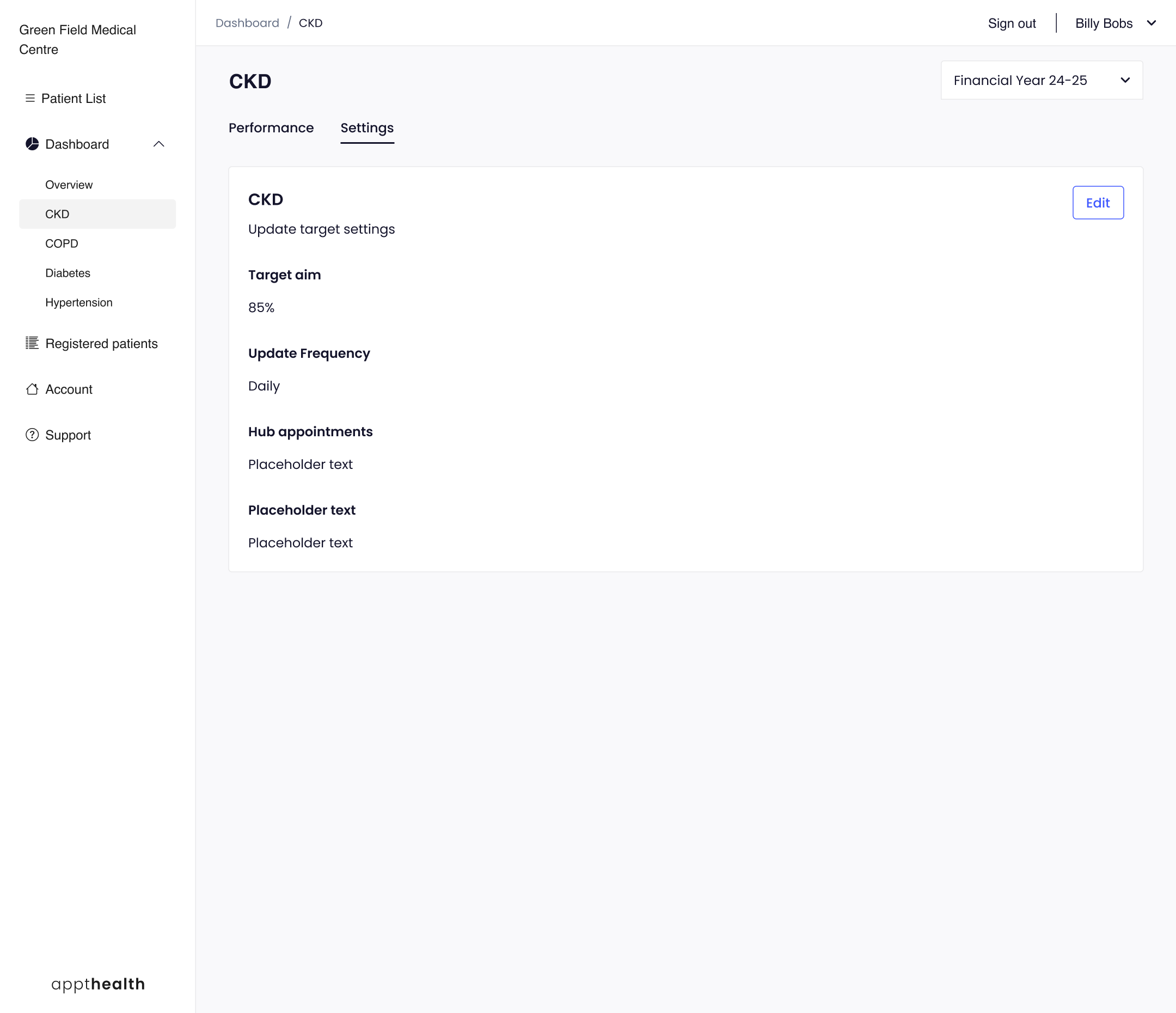
The dashboard provides users with a clear, real-time overview of targets, allowing them to track performance throughout the year. It enables practices to compare all focus areas, highlighting the best or worst performing targets so resources can be allocated effectively. Care Coordinators can break down each target by target percentile, helping them stay motivated and on track. Additionally, the dashboard segments patients by treatment status and demographics, offering insights into age and gender distribution, which can help target specific patient groups for improved engagement and care delivery.
Patient List
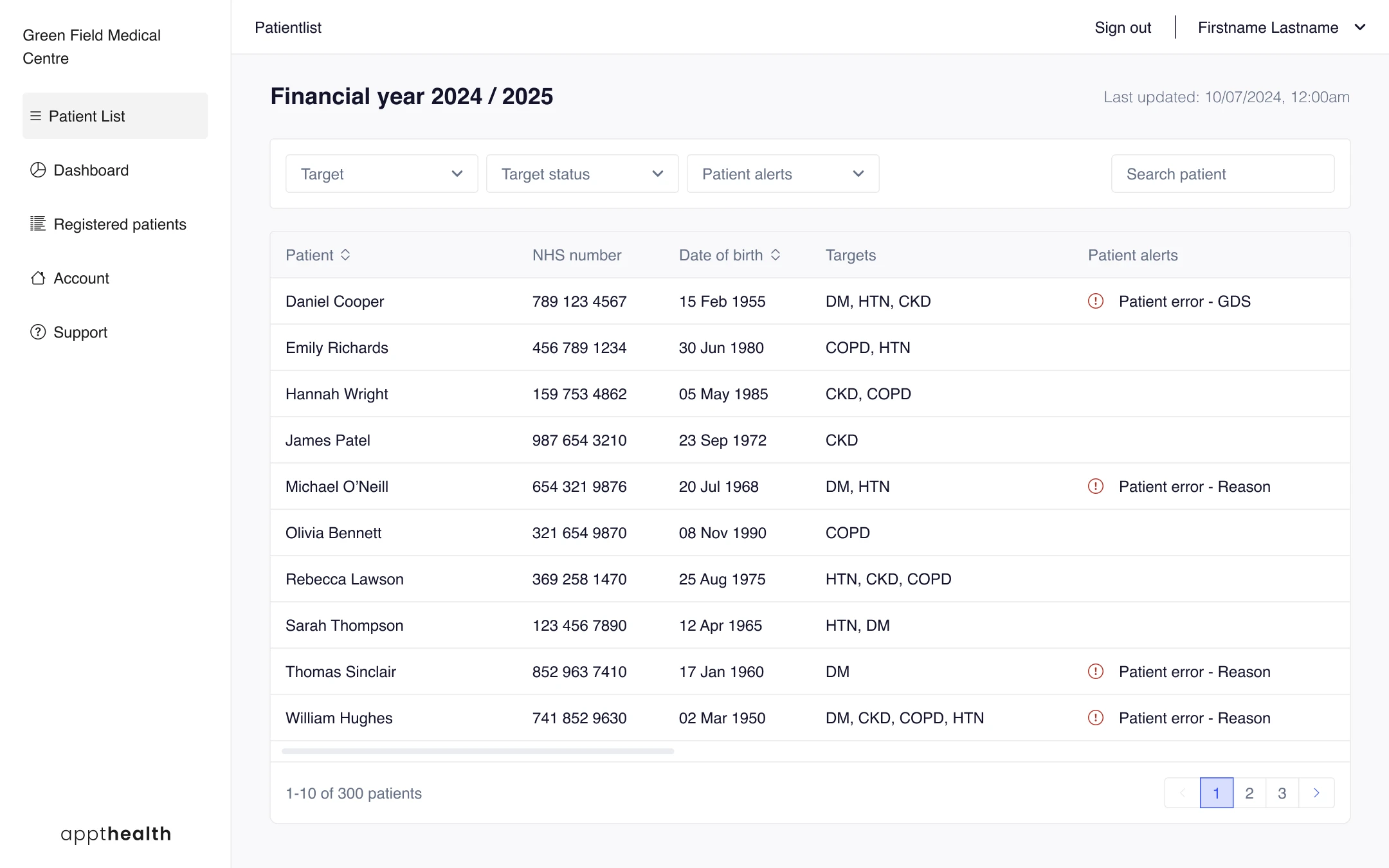
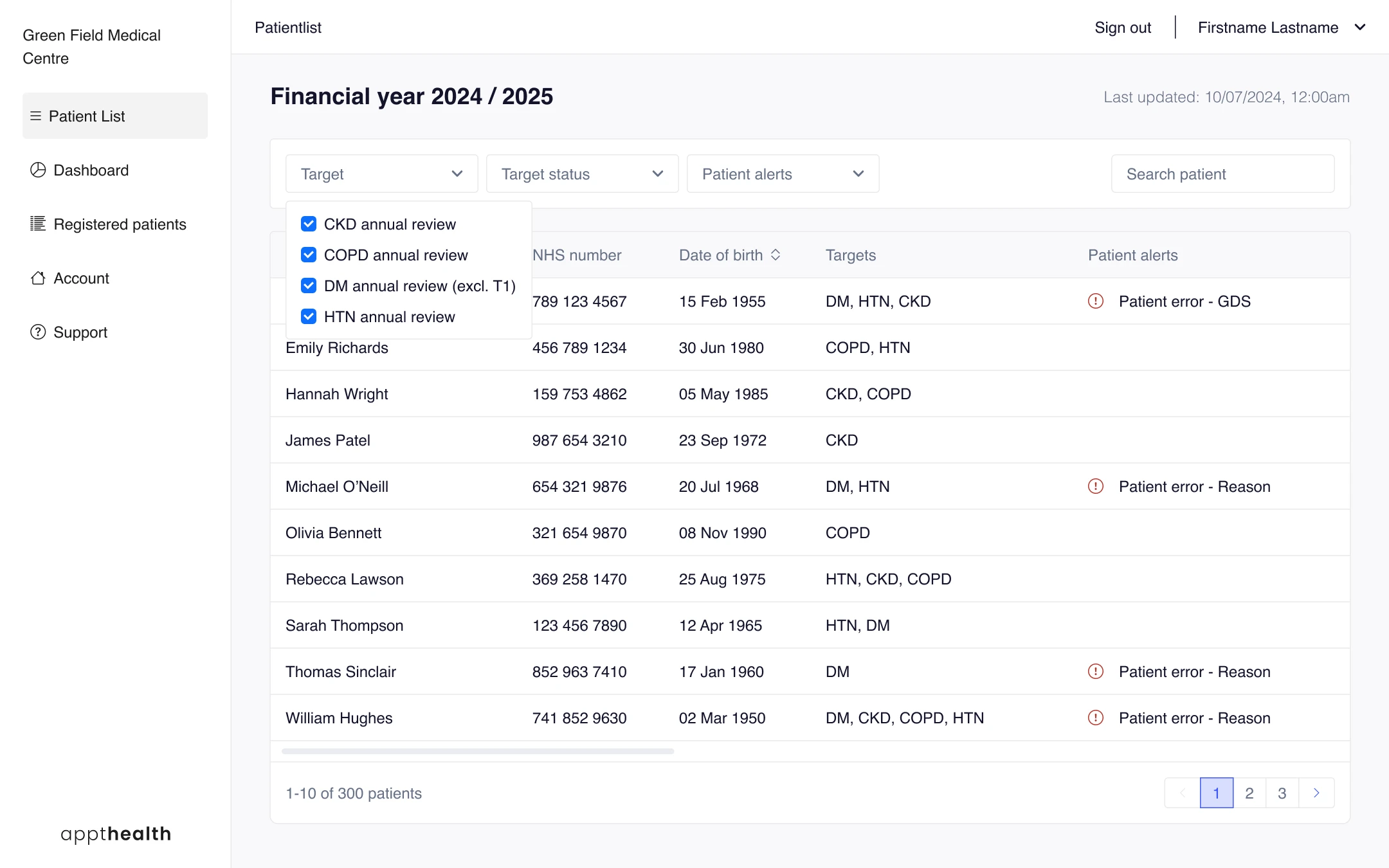
The patient list allows GP users to easily search for registered patients using their name, date of birth, or NHS number. Users can also filter patients by condition, treatment status, and alerts, making it simple to find specific individuals based on set criteria. This functionality helps streamline patient management and ensures quick access to relevant information.
CHallenges & INSIGHTS
One of the biggest challenges we encountered was the variation in workflows between different GP practices. While all practices adhere to NHS guidelines, each had its own approach to patient recalls, processing protocols, and targeting methods. This lack of standardisation made it difficult to create a tailored system that worked seamlessly across all practices. If there were greater opportunities for a more standardised approach, it could help eliminate inefficiencies.
The MVP served as an early proof of concept, demonstrating how patients with multimorbidity could be identified and proactively managed. However, one key learning was the variation in how different users managed patient accounts. Each user group whether care coordinators, practice managers, or GPs—had distinct objectives and workflows. The dashboard was primarily designed with care coordinators in mind, as they are on the frontlines of patient engagement. However, it would have been valuable to explore how the UI could be better tailored to accommodate the needs of other user types, ensuring a more holistic and adaptable solution for all stakeholders.